
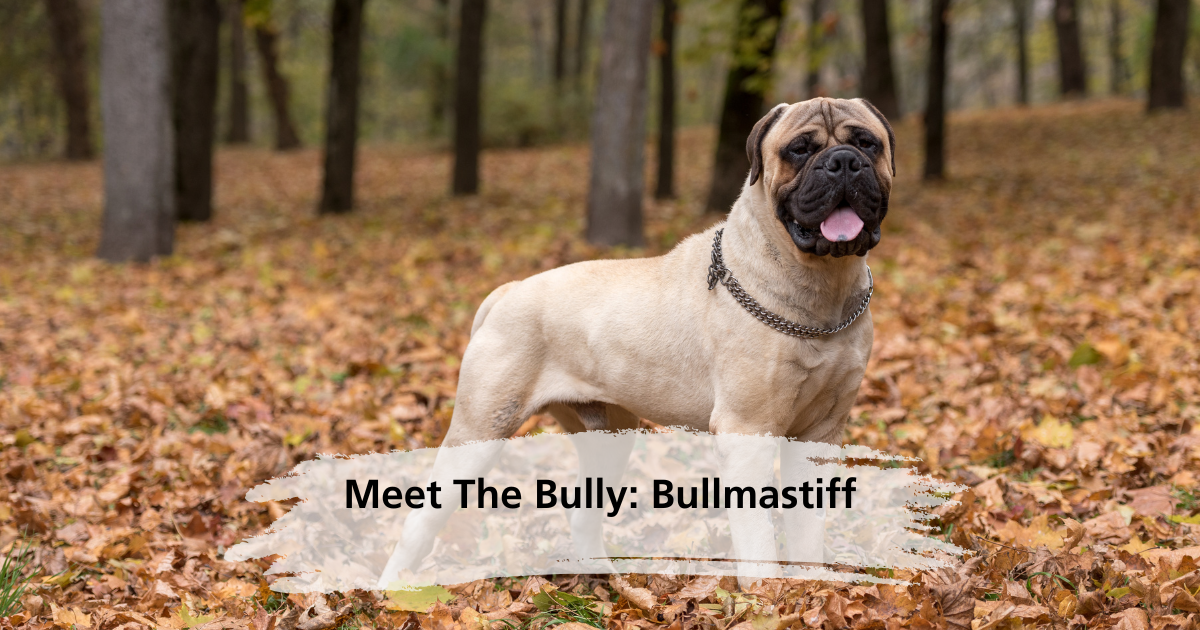
When people hear the term bully breed, their minds often jump straight to pit bulls or bulldogs. But the bully breed family is far broader and one of its most impressive members is the Bullmastiff. Powerful yet affectionate, protective yet calm, the Bullmastiff embodies many of the traits that make bully breeds so beloved and so misunderstood.
A History Built on Protection
The Bullmastiff was developed in 19th-century England by crossing the English Mastiff with the Bulldog. The goal was clear: create a dog large and strong enough to deter poachers on sprawling estates, but agile and intelligent enough to track and hold an intruder without excessive aggression.
Often called the “Gamekeeper’s Night Dog,” Bullmastiffs worked quietly and efficiently, relying on strength, courage, and instinct rather than barking or attacking indiscriminately. This purposeful breeding laid the foundation for the loyal, discerning guardian we know today.
Physical Traits: Power Meets Balance
Bullmastiffs are unmistakably imposing. Adult males can weigh 110–130 pounds, with females slightly smaller, yet their build is compact and athletic rather than bulky. Key physical traits include:
- Broad head with a short, square muzzle
- Muscular, well-balanced body
- Short, dense coat in fawn, red, or brindle
- Dark facial mask, a hallmark of the breed
Despite their size, Bullmastiffs are surprisingly agile and controlled in their movements—another classic bully breed characteristic.
Temperament: Calm, Loyal, and Deeply Devoted
At their core, Bullmastiffs are family dogs. They are known for being:
- Loyal and protective without being reactive
- Calm and steady, especially in adulthood
- Affectionate with their people, often forming strong bonds
- Confident but not unnecessarily aggressive
Like many bully breeds, Bullmastiffs are highly people-oriented and thrive on companionship. They do best in homes where they are treated as part of the family, not relegated to the backyard.
Intelligence and Training
Bullmastiffs are intelligent and independent thinkers—traits inherited from their working history. While they are eager to please, they respond best to:
- Consistent, confident leadership
- Positive reinforcement training
- Early socialization
Because of their size and strength, early training is essential. When properly guided, Bullmastiffs are respectful, reliable, and deeply trustworthy companions.
Care, Nutrition, and Lifestyle Needs
Though not overly high-energy, Bullmastiffs still require:
- Daily walks or moderate exercise
- Joint-supportive nutrition to maintain mobility
- High-quality protein to sustain muscle mass
- Mental stimulation to prevent boredom
Like many large bully breeds, they can be prone to joint issues, making proper weight management and nutrition especially important throughout their lives.
Bullmastiffs and the Bully Breed Stigma
Despite their calm nature, Bullmastiffs are sometimes lumped into harmful stereotypes simply because of their size and appearance. In reality, a well-bred, well-trained Bullmastiff is a steady, loving presence—more likely to lean against you than lunge at a stranger.
They exemplify what bully breeds truly are: loyal protectors, devoted companions, and dogs with big hearts to match their powerful frames.
Final Thoughts
The Bullmastiff may not always be the first breed mentioned in bully breed discussions, but it absolutely belongs in the conversation. With a rich history, balanced temperament, and unwavering loyalty, the Bullmastiff stands as a powerful reminder that bully breeds are defined not by fear, but by devotion.